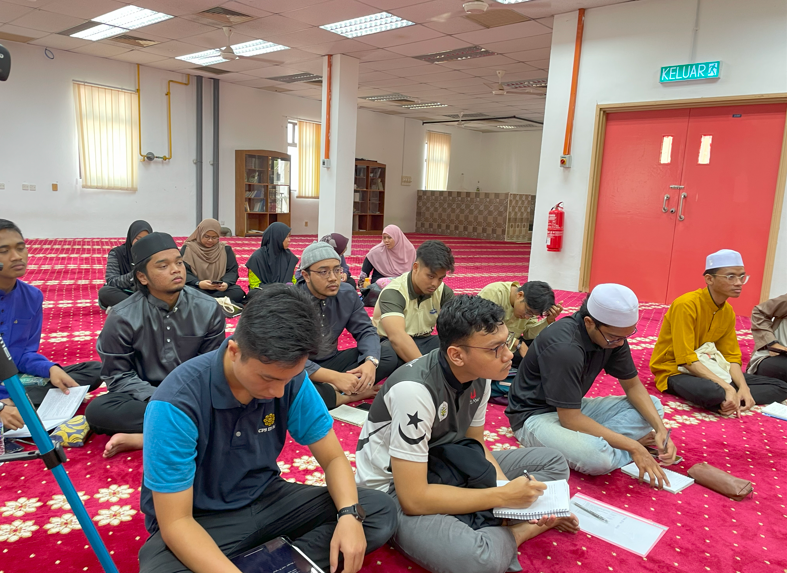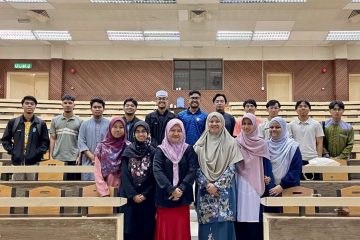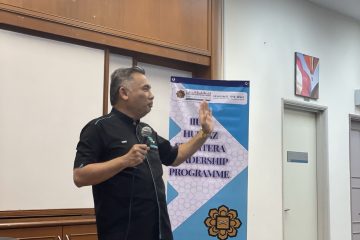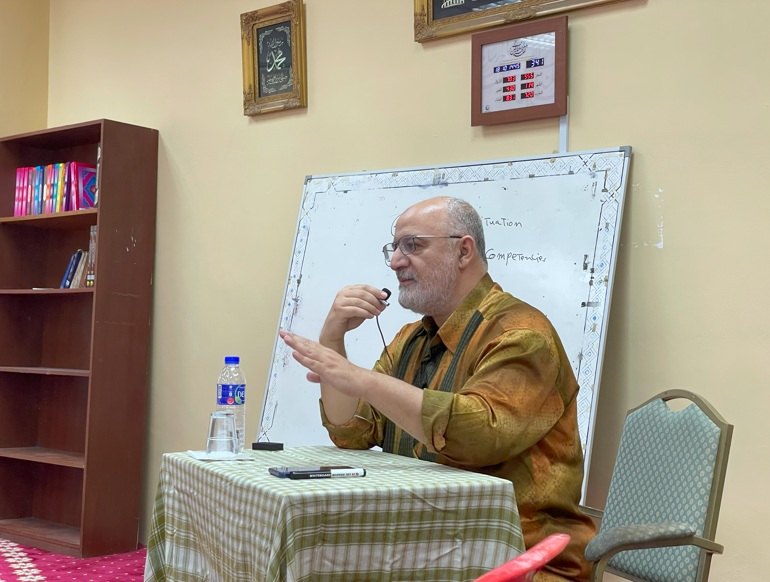
On 27th April 2024, Professor Waleed Fekry Faris gave a talk called “Leader’s Lounge”. His first point was everyone can be leaders in one way or another, whether in a huge or small community because each person should be responsible. Secondly, the bigger the leadership position, the closer you are to Allah s.w.t. For example, Allah s.w.t will question your amanah and responsibility more than others. Leadership also equals accountability. When a leader in a high position makes mistakes, they should take responsibility for it, not run away from their problems.
Leadership also means mentoring. Leaders should be capable of teaching and upgrading not only themselves but people around them. Trust should be built and we should treat each other as equals. Leadership roles are not meant to scare people away, but for us to do the right thing. Honesty should be fostered and planted in ourselves and we should have that in our daily lives. Betrayal and stabbing behind one’s back are normal occurrences in leadership, so we need to remain steadfast, be patient, and have a strong uphold toward Islam. As future leaders, we should also put effort into what we strive for, not just be complacent. We should step out of our comfort zone.
With leadership comes tolerance. There should be a compromise between teammates or between leader and subordinate. We should give each person tasks based on their abilities and capabilities. Or else, one might crumble under the pressure and as a leader, you should be held accountable for that. We should train ourselves on how to deal with other people — by emulating the stories of Rasulullah s.a.w and his Companions. With patience and hard work, we can persevere and push through for our cause, especially if we have a firm stance that is heavily inclined towards Islam. We should work more and talk less.
A leader should also be effective, such as our output as future leaders for the Ummah should first change and touch the lives of our students. Or else, all our efforts are futile and useless. In leadership, we should be able to transform people from good to bad in the scope of both Islamic and professional sense. If a leader is good professionally but not good Islamically, it is not a good trait of leadership, and vice versa. We should possess these two attributes to be a good leader.
Two things should be done before accepting or rejecting a position. The first thing that should be done is assessing the situation. We should understand the culture and background of each person, and then assess their strengths and weaknesses. We should push people to express their opinions, not be monotonous, and just follow whatever other people say. Secondly, each one of us should address our competencies. If we are bad at one thing, we should strive to fix it. Of course, this should be done within the limits of Islam, and we should not transgress it as we have a firm stance towards our religion.
As Professor Waled said, sometimes, as a leader, we should sacrifice our personal domain for the public domain. This is especially true because we sacrifice our comfort, hopes, aspirations, and dreams to save others. We should also be completely serious when it comes to upholding leadership. If we are having a difficult time, one should implement zikrullah. And to instill hope in oneself, we should reflect on the Quranic verses. To find good role models and emulate them, especially in terms of leadership, we should read the seerah of Rasulullah s.a.w and his Companions, as they are the most fair, just, professional, and all in between. As Muslim leaders, we should prioritize Islam over the Western and contemporary values that have infected our world today. May Allah s.w.t ease us and guide us in this journey.